
What cultural patterns and motifs from our communities can inform the design of our collaborative quilts?
We will be collecting sketches and photos of patterns to inspire the casting forms we will laser cut to create laser cut paper mold forms and vacuum forms to grown biomaterials in.
We will be collecting sketches and photos of patterns to inspire the casting forms we will laser cut to create laser cut paper mold forms and vacuum forms to grown biomaterials in.

Above: mycelium growing in feedstock of rice and and raman noodles. Note, the crane form was flipped out of the mold half way through growing to expose front side to air for more growth.
|
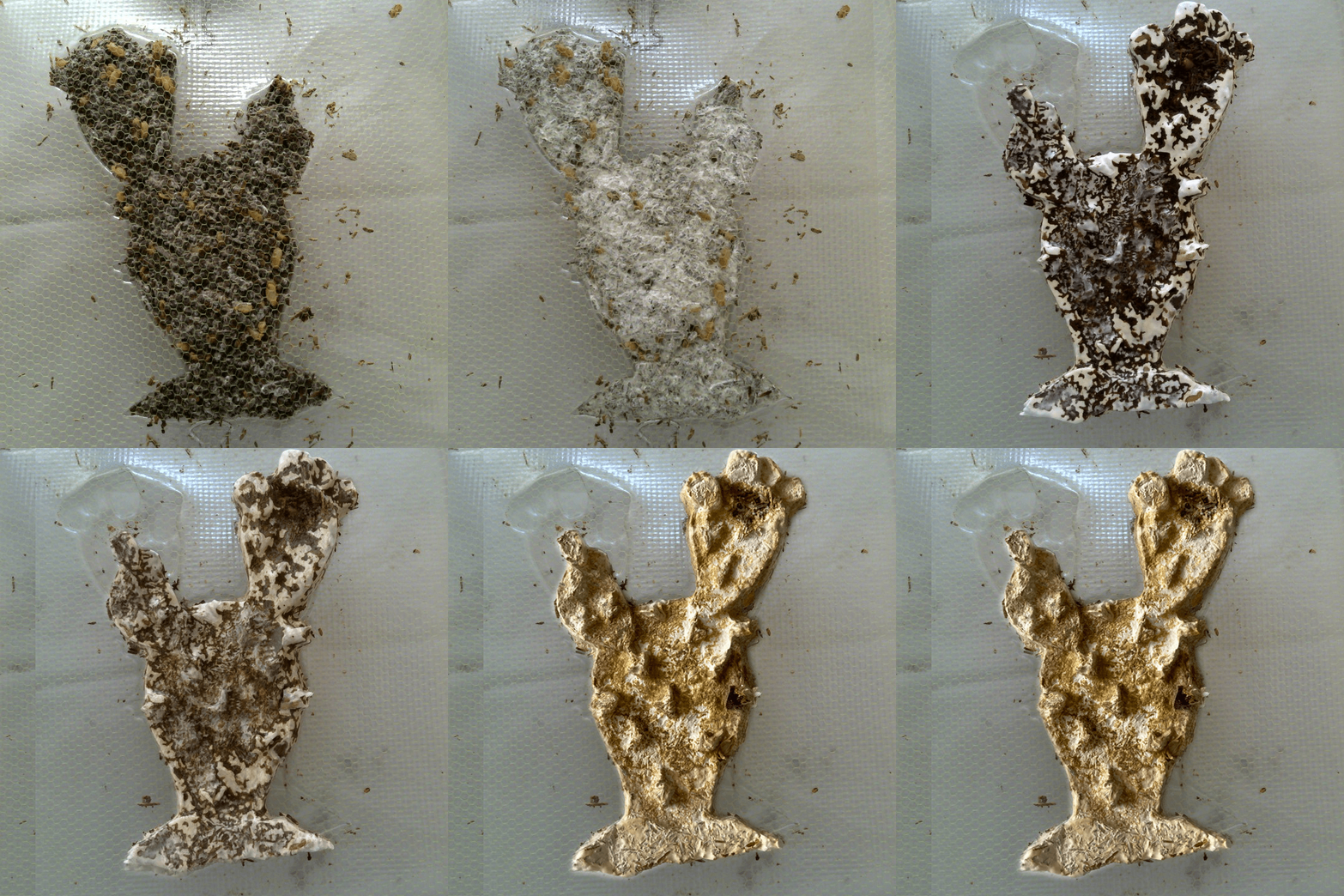
Above: mycelium growing in feedstock of rice and nopales cactus. Note, the cactus form was flipped out of the mold half way through growing to expose front side to air for more growth.
|
MYCELIUM GROWING PROCESS

|

|
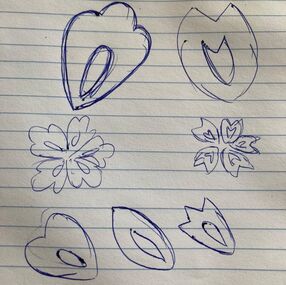
1. sketches of a pattern design are shared.
|
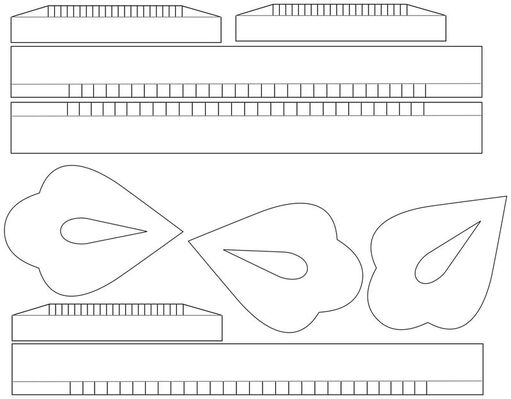
2. The design is selected and translated into a vector file that can be laser cut.
Pieces are added turn the shape into a 3D casting form.
|

3. The pieces are laser cut and assembled into units.
|
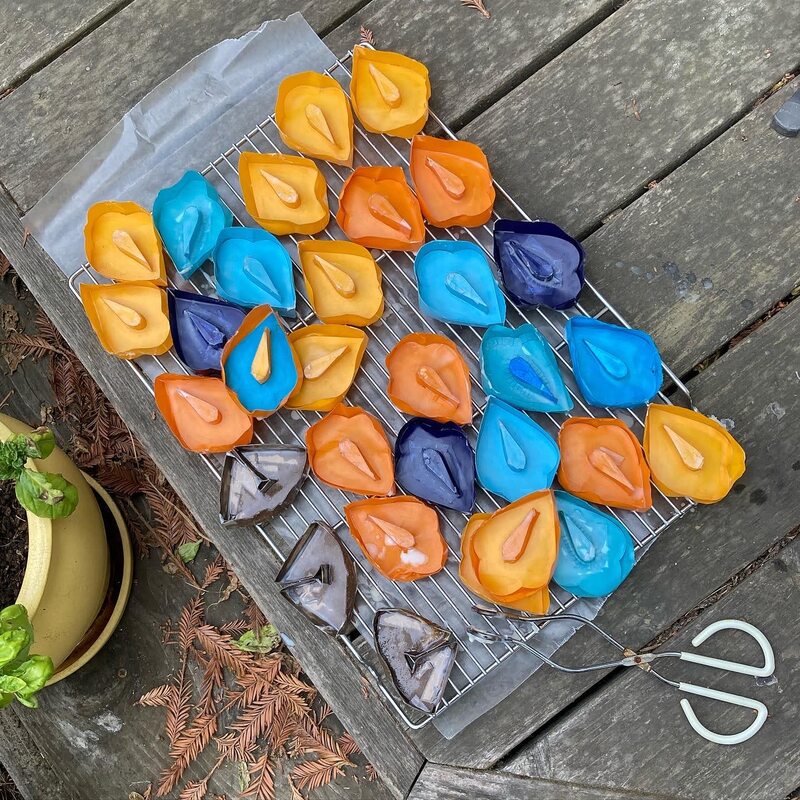
4. The forms are dipped into wax and sprayed with isopropyl alcohol.
|
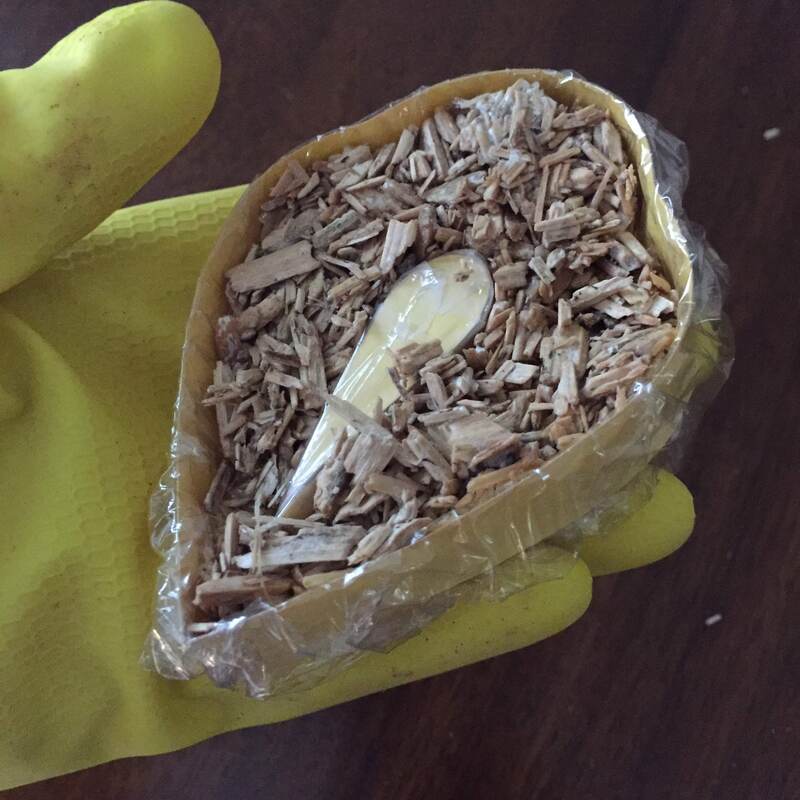
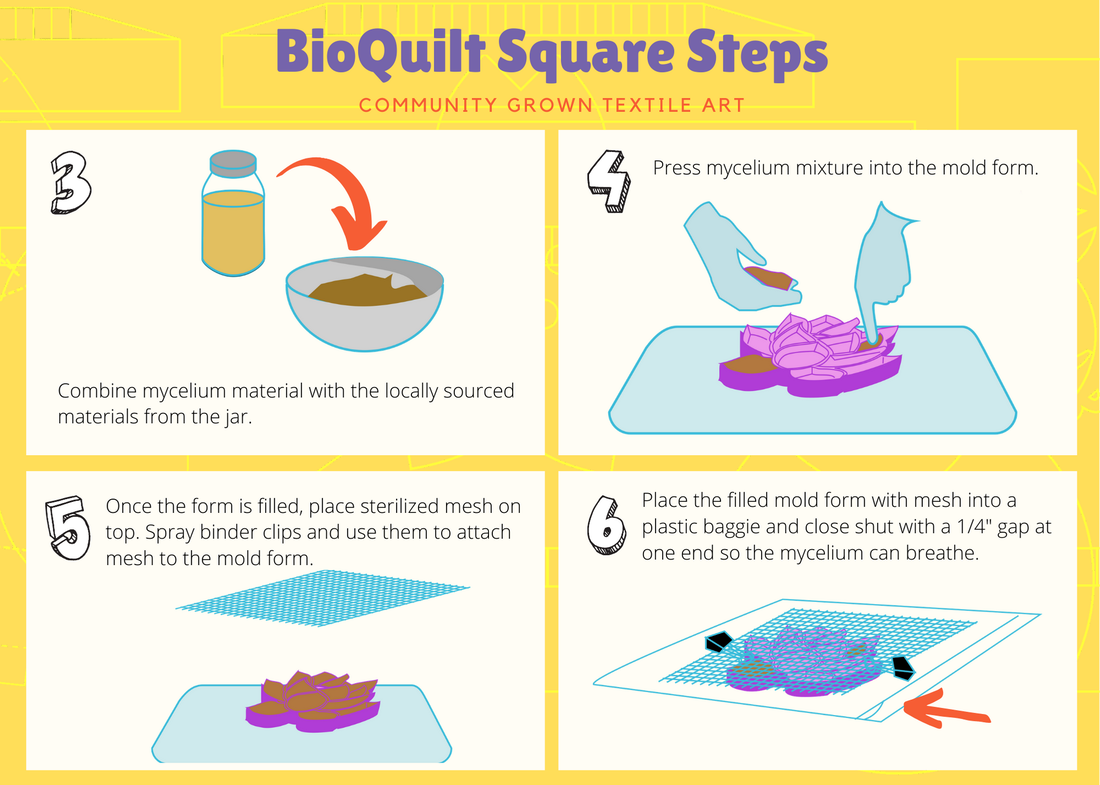
5. The forms are filled with mycelium mixed with materials it can feed off of. We will be collecting materials from the three community locations we are working with.
|
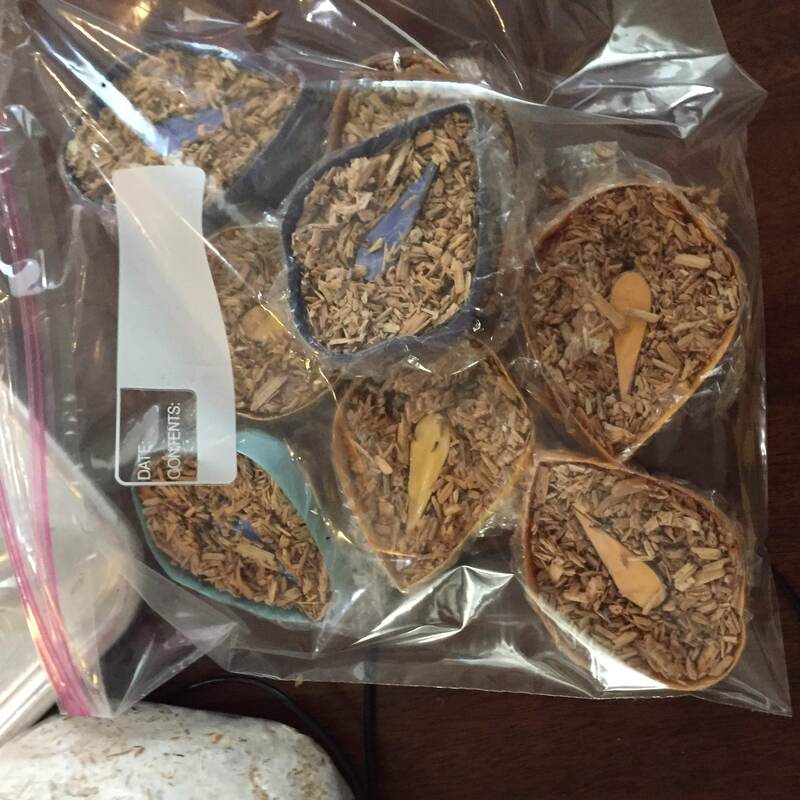
6. The forms are placed into plastic zip bags. The bags are sealed to have a 1/4" gap so the growing material has air exchange.
|
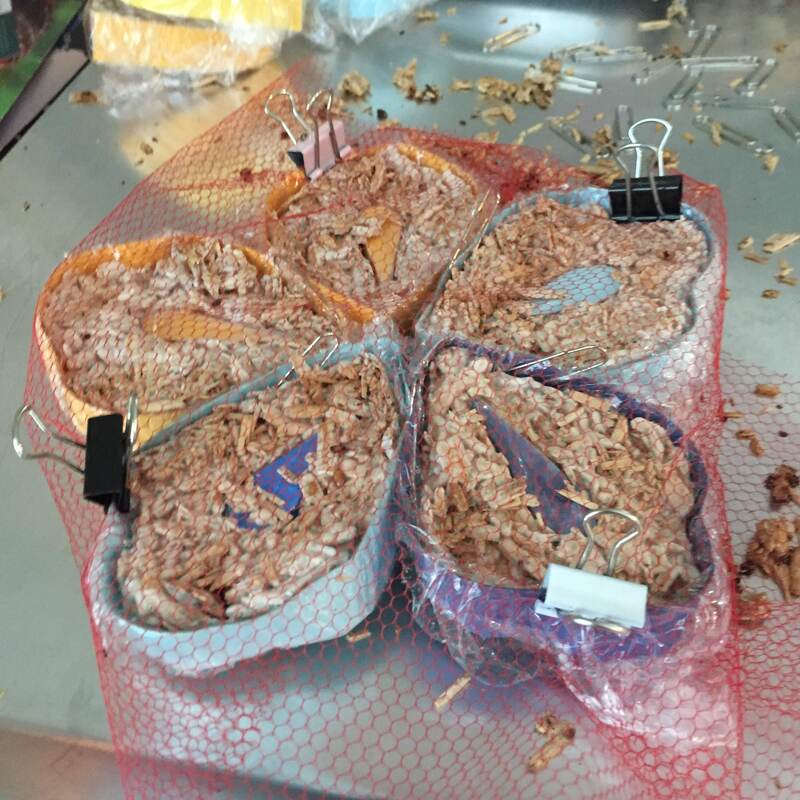
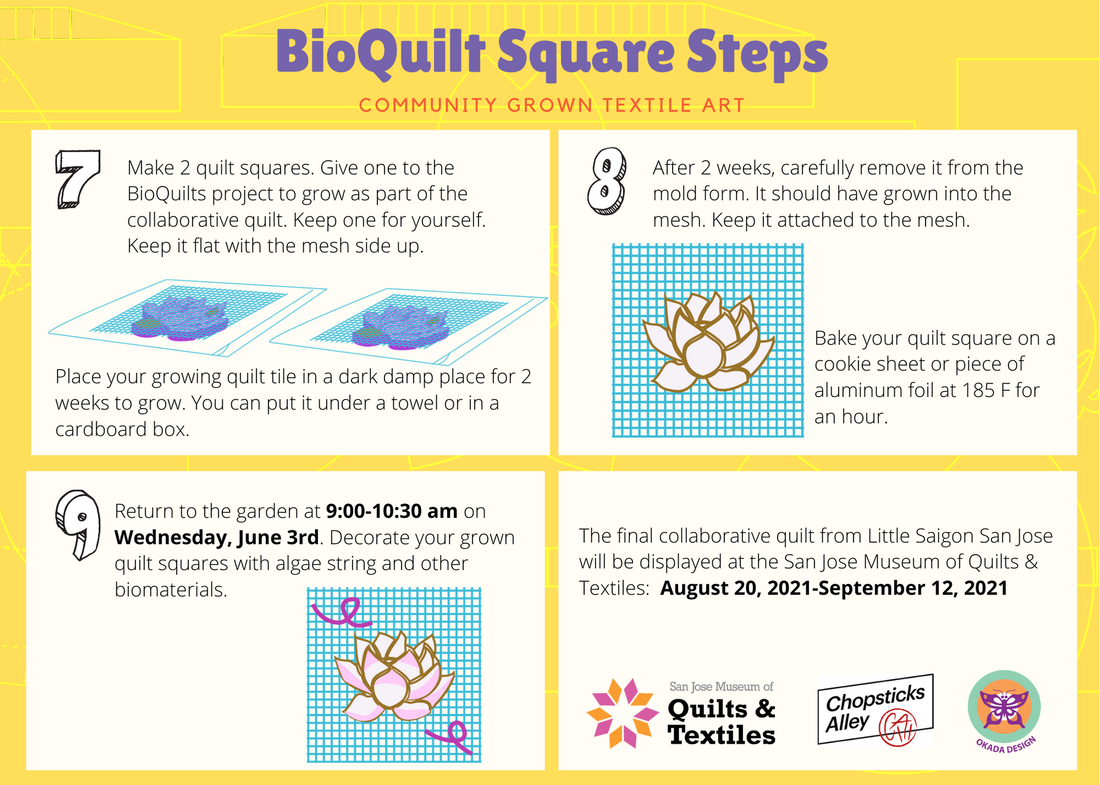
7. After a week of growing, the forms are pressed against sterized mesh and grow into the mesh.
|
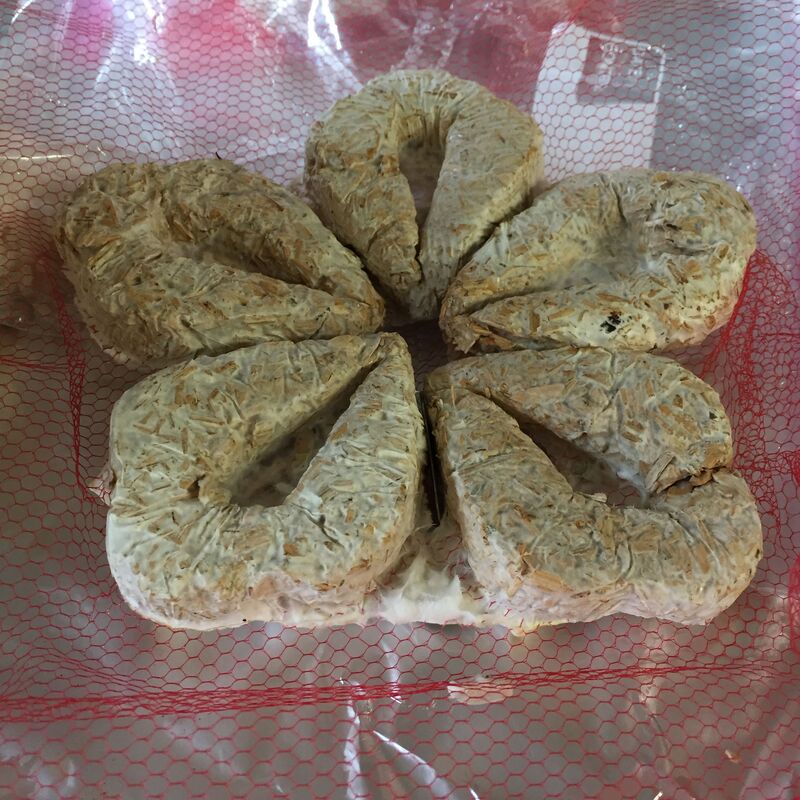
8. the forms are placed back into the ziplock bag for another week.
|

9. After the week or two of additional growing, the grown assembly is baked at 185 F for an hour.
|

10. Final quilt is sewn and/or grown together with additional mycelium substrate and other biomaterials.
|
Quilt Pattern Element for Little Saigon, San Jose, CA. Concept design by Cynthia Cao
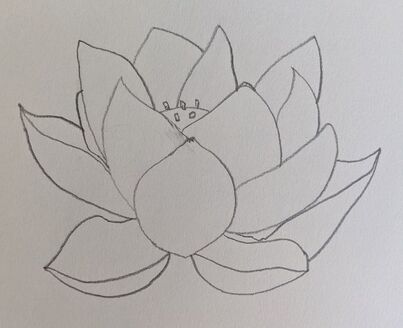
Sketch by artist Cynthia Cao
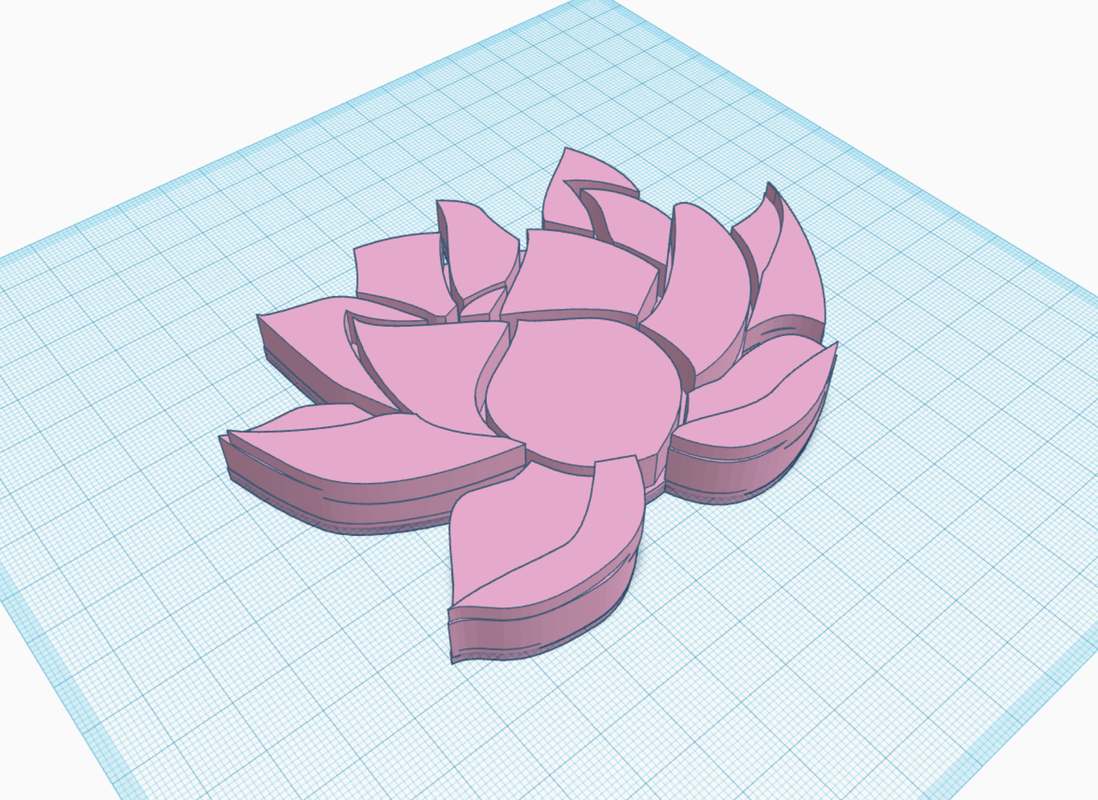
CAD file of Cynthia Cao's sketch. This was 3D printed as a vacuum form buck. It was vacuum formed to be a mold form for participants in Little Saigon to use as casting forms for their bioquilt squares.
|

Vacuum formed mold made from 3D printed form.
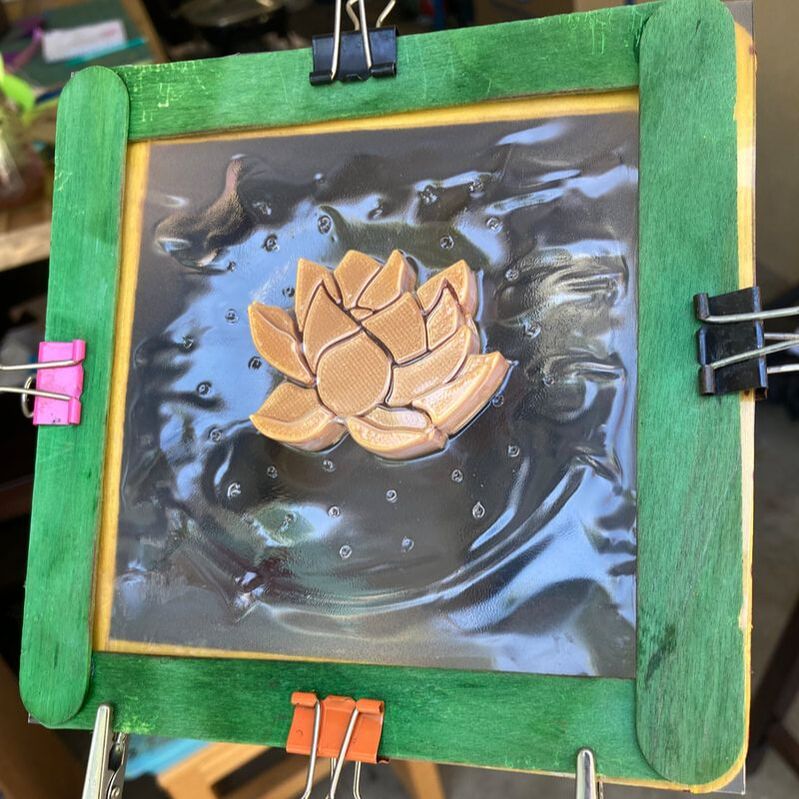
3D printed form used to create mold form for filling with mycelium incubated materials.
|
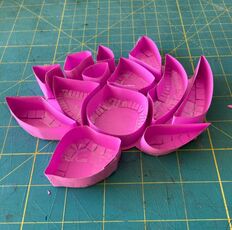
Laser cut paper mold form. This will be dipped in hot wax to make it a waterproof and sterile casting form. This is a second type of mold form participants can choose to use.
|
Quilt Pattern Element for Japantown, San Jose, CA. Concept design by Addie Miyako
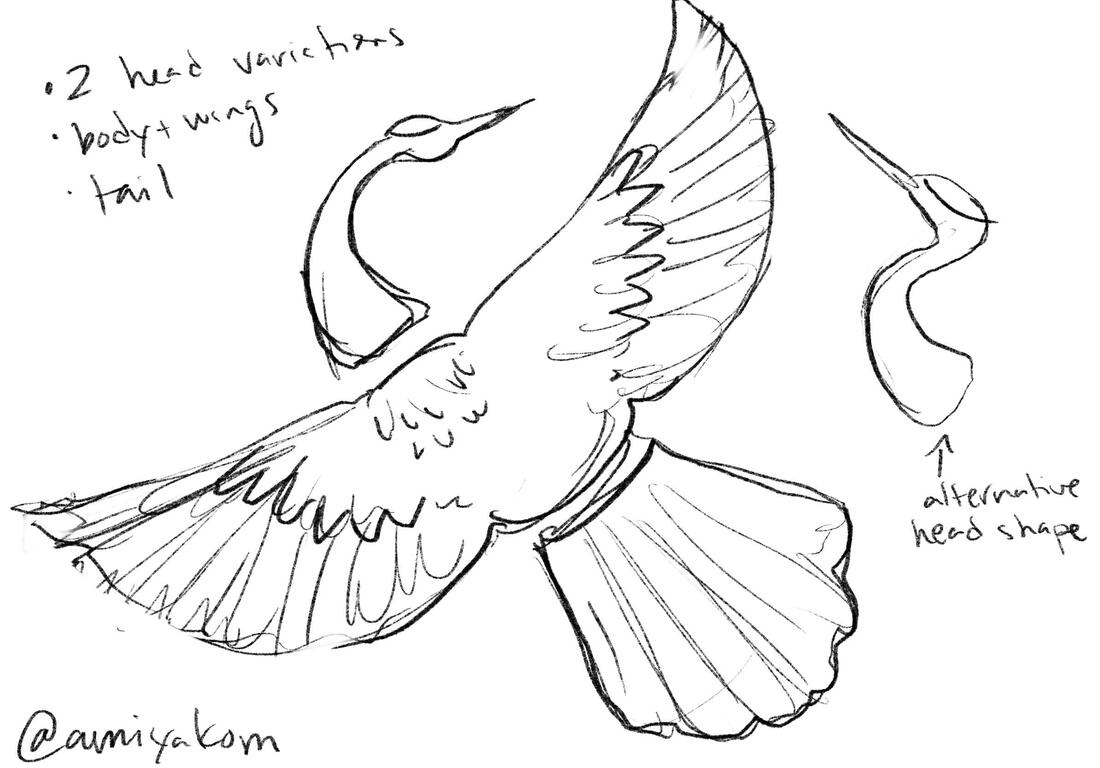
Crane sketch by Addie Miyako
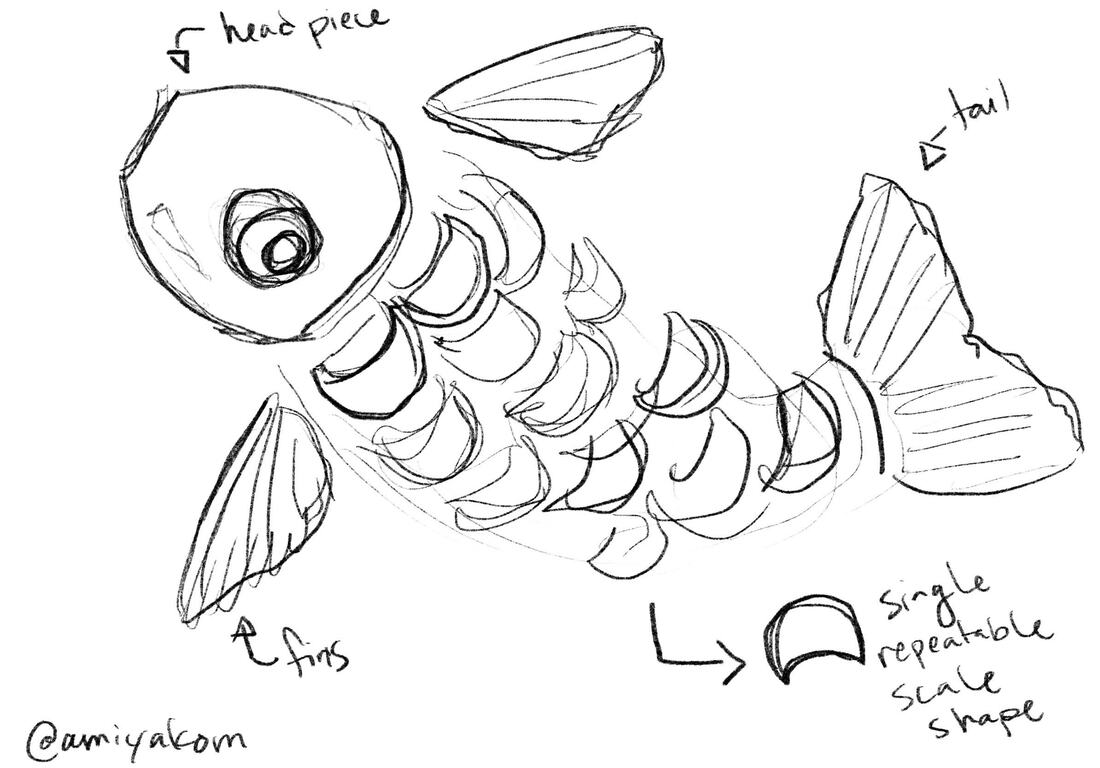
Fish sketch by Addie Miyako.
|
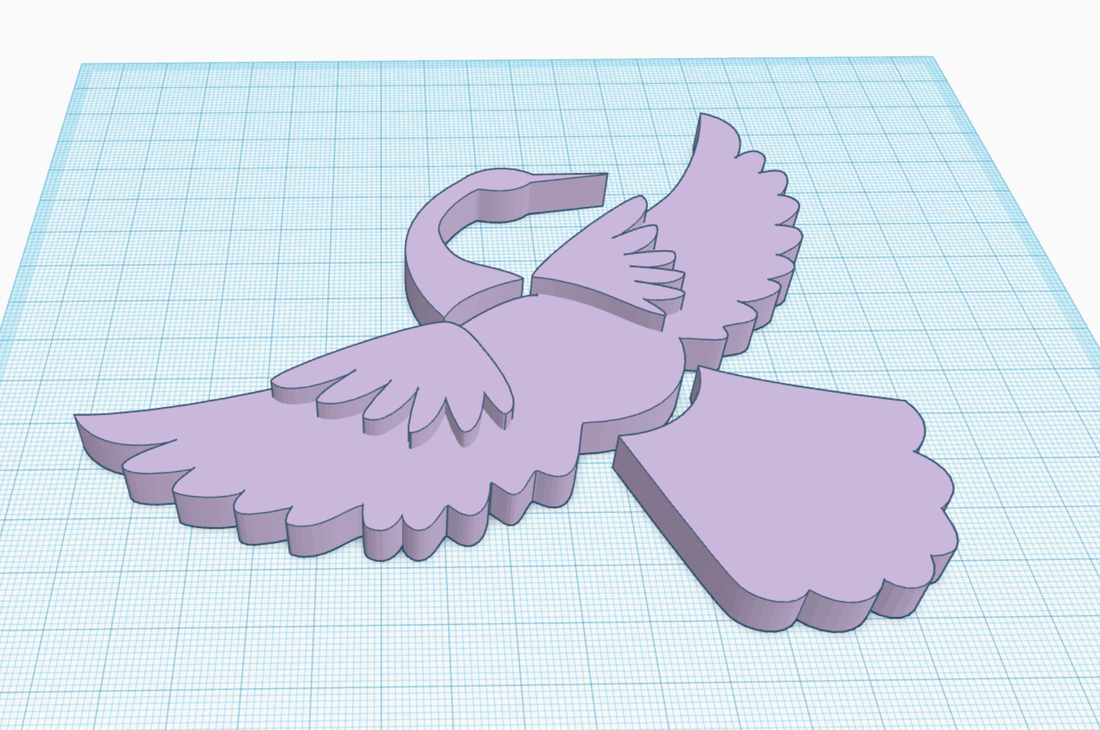
CAD file of Addie Miyako's sketch. This will be 3D printed as a vacuum form buck. It will be vacuum formed to be a mold form for participants in Japantown to use as casting forms for their bioquilt squares.
|
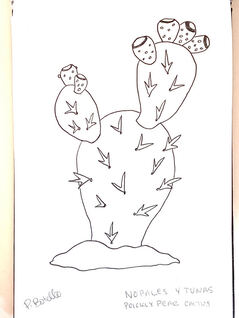
Quilt Pattern Element for South of Market Workshops at Veggielution Pocket Park, San Jose, CA. Concept design by Patty Botello.
I decided to create a sketch of nopales y tunas or prickly pear cactus. I’ve always loved the beauty and strength of the nopal and thought that it was a fitting symbol to represent the Latino community of Mayfair, San Jose and beyond.
The nopal is prominently featured on our Mexican flag, it’s a part of our diet both the nopal pad as well as the sweat tuna fruit and it has medicinal benefits since it high in antioxidants, vitamins and minerals.
The nopal is resilient in adversity, it can survive through droughts, high temperatures and in poor soil. The nopal like the Latino community can grow anywhere in the world and thrive. -Patty Botello (sketch below, more process images of the mold form coming soon!)

|

|
